
Objective pronouns in English seem so easy. But then comes the dutch grammar with all the exceptions. Then it gets tricky. I was confused about the pronouns and read about them in various grammar books. Some of them were way to stif, others way too simplified.
In the end what helped me most with the objective pronouns was to compare them with the possesive ones and learn them side by side. You can see the tables below and it becomes quite clear what the difference is.
| Van vie is dit hond? (Whose is that dog) | Wie ziet hij? (Who does he see?) |
| Die hond is van mij | Hij ziet mij/me |
| Die hond is van jou | Hij ziet jou/je |
| Die hond is van u | Hij ziet u |
| Die hond is van haar | Hij ziet haar |
| Die hond is van hem | Hij ziet hem |
| Die hond is van ons | Hij ziet ons |
| Die hond is van jullie | Hij ziet jullie |
| Die hond is van hen | Hij ziet hen / hun / ze |
In bold is the most tricky part – which pronoun to use for them.
if you do something to them = hen Ik geef het aan hen / I give it to them
if you see/hear/understand them = hun ik heb het hun belofed / i promised them
Refering to people and things
Referring to things and people (singular)
When you refer to a het- word use het.
Here are some examples
Heb je het boek gelezen? Ja, ik heb het gelezen.
Wat vind je van het boek? Het is spannend.
Mag ik het ook lezen? Ja, je kunt het meenemen.
When you refer to a de- word use hem.
Waar is mijn bril? Ik heb hem niet gezien.
Is dat je vader op de foto? Nee, dat is hem niet.
Referring to things and people (plural) – use ze
To compile this article the THIS grammar books was used
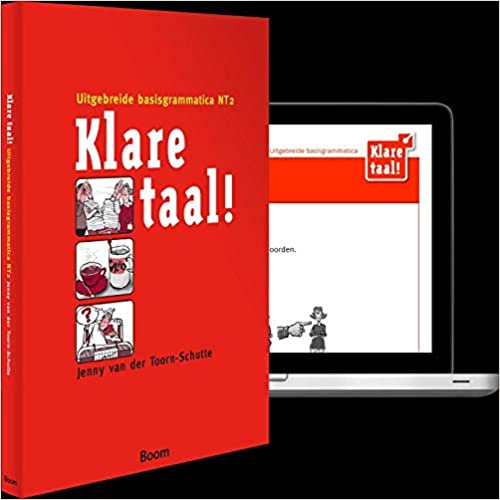
This is an affiliate link. If you buy through it I get a small commission. It doesn’t affect the price you pay.
