
In Dutch, the phrase “Ik ben” means “I am.”
You use it to talk about yourself — your name, nationality, job, age, and how you feel.
Explore the mind map below to see the most common ways to use “Ik ben.”
How “Ik ben” Works
The sentence structure is very simple:
Examples:
Ik ben Nederlands.
Ik ben student.
Ik ben 34 jaar.
Ik ben moe.
In Dutch, ben is the first-person form of the verb zijn, which means “to be.”
The verb zijn is one of the most common verbs in the Dutch language.
1. Saying Your Name
You can use Ik ben to introduce yourself.
Example:
More examples:
Ik ben Fatima.
This is one of the first things people say when meeting someone new.
For example:
Hallo! Ik ben Mark.
2. Saying Where You Are From
You can also use Ik ben to talk about your nationality.
Example:
More examples:
Ik ben Bulgaars.
Ik ben Spaans.
Another very common Dutch sentence is:
I come from Bulgaria.
Both forms are used in conversations.
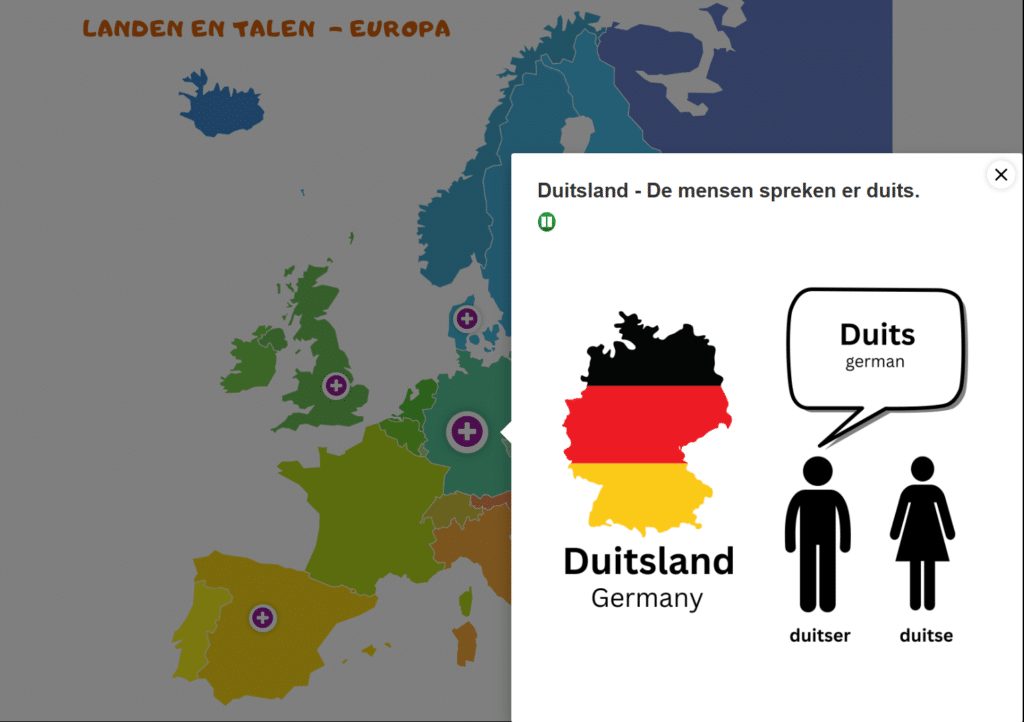
Here you can look up the name of your country, nationality and language in Dutch. Choose your continent first:
3. Talking About Your Job
You can use Ik ben to say what you do.
Examples:
Ik ben leraar.
Ik ben verpleegkundige.
Ik ben chauffeur.
Important:
In Dutch, you usually do not use the article “een” (a/an) with professions.
So we say:
4. Saying Your Age
In Dutch, you say your age with Ik ben.
Example:
I am 34 years old.
More examples:
Ik ben 25 jaar.
Ik ben 40 jaar.
This is different from some languages where people say “I have 34 years.”
In Dutch you always say:
To help you out with saying numbers in dutch we have this little video Enjoy
5. Saying How You Feel
You can also use Ik ben to describe how you feel.
Examples:
Ik ben moe.
I am tired.
Ik ben blij.
I am happy.
Ik ben ziek.
I am sick.
Ik ben boos.
I am angry.
You can also combine feelings:
I am tired but happy.