
Skip to content
Self Study Dutch
Menu
  • HOME
  • BY LEVEL
  • Skills
    • VOCABULARY
    • LISTENING
    • READING
    • GRAMMAR
  • TEXTBOOKS
    • Study Guides
  • EXAMS PREP
Menu

Ik ben – how to talk about yourself in Dutch

In Dutch, the phrase “Ik ben” means “I am.”

You use it to talk about yourself — your name, nationality, job, age, and how you feel.

Explore the mind map below to see the most common ways to use “Ik ben.”

How “Ik ben” Works

The sentence structure is very simple:

 
Ik ben + information about yourself
 

Examples:

Ik ben Anna.
Ik ben Nederlands.
Ik ben student.
Ik ben 34 jaar.
Ik ben moe.
 

In Dutch, ben is the first-person form of the verb zijn, which means “to be.”

The verb zijn is one of the most common verbs in the Dutch language.

1. Saying Your Name

You can use Ik ben to introduce yourself.

Example:

 Ik ben Sofie.
I am Sofie.
 

More examples:

Ik ben Anna.
Ik ben Mark.
Ik ben Fatima.
 

This is one of the first things people say when meeting someone new.

For example:

Hoi! Ik ben Sofie.
Hallo! Ik ben Mark.

2. Saying Where You Are From

You can also use Ik ben to talk about your nationality.

Example:

Ik ben Nederlands.
I am Dutch.
 

More examples:

Ik ben Belgisch.
Ik ben Duits.
Ik ben Bulgaars.
Ik ben Spaans.
 

Another very common Dutch sentence is:

 
Ik kom uit Bulgarije.
I come from Bulgaria.
 

Both forms are used in conversations.


Here you can look up the name of your country, nationality and language in Dutch. Choose your continent first:
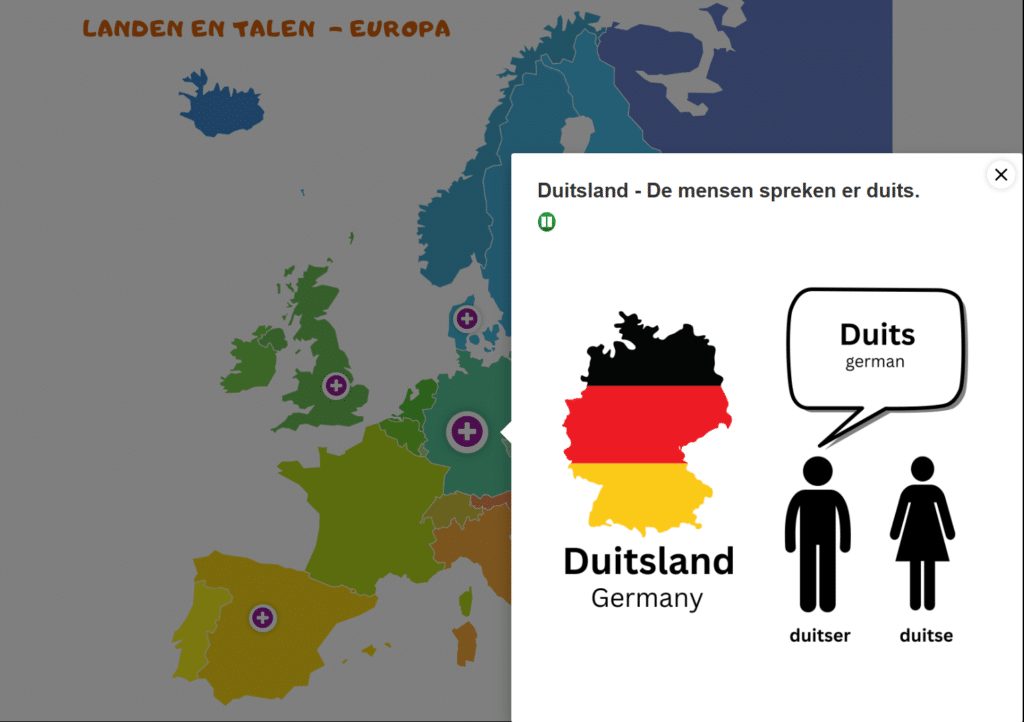
Europe

3. Talking About Your Job

You can use Ik ben to say what you do.

Examples:

 
Ik ben student.
Ik ben leraar.
Ik ben verpleegkundige.
Ik ben chauffeur.
 

Important:

In Dutch, you usually do not use the article “een” (a/an) with professions.

So we say:

Ik ben student.
 not
 Ik ben een student.

4. Saying Your Age

In Dutch, you say your age with Ik ben.

Example:

Ik ben 34 jaar.
I am 34 years old.
 

More examples:

Ik ben 18 jaar.
Ik ben 25 jaar.
Ik ben 40 jaar.
 

This is different from some languages where people say “I have 34 years.”

In Dutch you always say:

 Ik ben + age

To help you out with saying numbers in dutch we have this little video Enjoy

5. Saying How You Feel

You can also use Ik ben to describe how you feel.

Examples:


Ik ben moe.
I am tired.

Ik ben blij.
I am happy.

Ik ben ziek.
I am sick.

Ik ben boos.
I am angry.


You can also combine feelings:

 
Ik ben moe maar blij.
I am tired but happy.

Recent Posts

  • Dutch for School Parents – Sick Child Phrasebook
  • What Is My Dutch Level? Start Here
  • Learn Dutch with Music: “Zou Niet Willen Dat Ik Kerst Mis” Yves Berendse
  • Dutch Christmas Songs — The Full Playlist
  • Dutch Vocabulary Mind Maps: Laundry

Cover for Self Study Dutch
20
Self Study Dutch

Self Study Dutch

If you want to learn dutch on your own and ace the inbureging teams this is the place to get study guides and extra materials to help you suceed

Self Study Dutch

2 weeks ago

Self Study Dutch
Learning Dutch can feel overwhelming at the beginning.But sometimes two small words can unlock many sentences.In this new video we learn one of the most important Dutch structures:“Ik ben” – I am.With this simple pattern you can already talk about:• your name• your age• your nationality• your occupation• and even how you feel. ... See MoreSee Less

How to Introduce Yourself in Dutch | Ik ben

youtu.be

Learn how to introduce yourself in Dutch using one of the most important beginner structures: "ik ben" (I am).With this simple pattern you can talk about:• y...

Video

View on Facebook
· Share

Share on Facebook Share on Twitter Share on Linked In Share by Email

Self Study Dutch

1 month ago

Self Study Dutch
Last week I realised (again) how stressful it can be to write to school in Dutch when your child is sick.So I finally finished something I’ve been thinking about for a while: a small Dutch phrasebook for school communication — the phrases parents actually use.It’s not about perfect Dutch, just clear and normal communication.I’m sharing it here first, in case it helps anyone: selfstudydutch.gumroad.com/l/xmoejl?_gl=1*15qizgs*_ga*NTI5MjY2OTQxLjE3NzA2MzExOTU.*_ga_6LJN6D94N6... ... See MoreSee Less

Photo

View on Facebook
· Share

Share on Facebook Share on Twitter Share on Linked In Share by Email

Self Study Dutch

2 months ago

Self Study Dutch
New year, new inspiration. We are hard at work on our YouTube channel to make it as useful as possible for all of you who study Dutch on your own. Check out our latest grammar video about how to link sentences with omdat ... See MoreSee Less

Dutch A1–A2 | Linking sentences with omdat

youtu.be

In this video you learn how to link two sentences with "omdat".At A1 level, short sentences are perfectly correct.At A2 level, you can connect them to explai...

Video

View on Facebook
· Share

Share on Facebook Share on Twitter Share on Linked In Share by Email

Self Study Dutch

11 months ago

Self Study Dutch
Looking for a structured and practical way to start learning Dutch? 🇳🇱 Whether you're preparing for the inburgering exam or just starting your language journey, Nederlands in Gang is a textbook you don't want to miss!📚 In my latest blog post, I share an in-depth review of this amazing resource, covering:✅ Why it’s perfect for self-learners✅ Key features that make it stand out✅ How it fits into your Dutch learning routinePlus, I’ve included tips on how to make the most of this book for independent study! 🎯👉 Check out the full review here: selfstudydutch.com/nederlands-in-gang-self-study-textbook-reviewLet’s make Dutch learning fun and effective together! 💬 Share your thoughts in the comments—have you used this book before? What did you think?#LearnDutch #DutchLanguage #SelfStudyDutch #NederlandsInGang #InburgeringPreparation ... See MoreSee Less

Nederlands in Gang: A Self-Study Textbook Review - Self Study Dutch

selfstudydutch.com

Introduction If you’re looking for a beginner-friendly Dutch textbook to kickstart your language journey, Nederlands in Gang is one of...
View on Facebook
· Share

Share on Facebook Share on Twitter Share on Linked In Share by Email

Self Study Dutch

1 years ago

Self Study Dutch
🎶 Dive into Dutch with Yves Berendse's "Terug In De Tijd"! 🎤Songs are a fantastic way to enhance your language skills, offering a treasure trove of vocabulary, colloquial expressions, and cultural insights. Our latest post breaks down the lyrics of this catchy tune, perfect for Dutch learners. Whether you're reminiscing about old friendships or looking to expand your Dutch vocabulary, this song has something for everyone.Check out the full lyrics overview and learn how to use expressions like "verloor je uit het oog" (lost you out of sight) in everyday conversations. Let's make language learning fun and relatable! 🌟🔗 Read more on our blog: selfstudydutch.com/terug-in-de-tijd-yves-berendse-lyrics-overview-for-dutch-learners/ #LearnDutch #DutchMusic #LanguageLearning #SelfStudyDutch #DutchVocabulary #CulturalInsightsWhat line from the song stands out to you? Let us know in the comments! 🗨️ ... See MoreSee Less

Photo

View on Facebook
· Share

Share on Facebook Share on Twitter Share on Linked In Share by Email

Information

  • Privacy Policy
  • Terms of Service
  • Affiliate Disclosure
© 2026 Self Study Dutch | Powered by Superbs Personal Blog theme